
Rituals

Handfasting
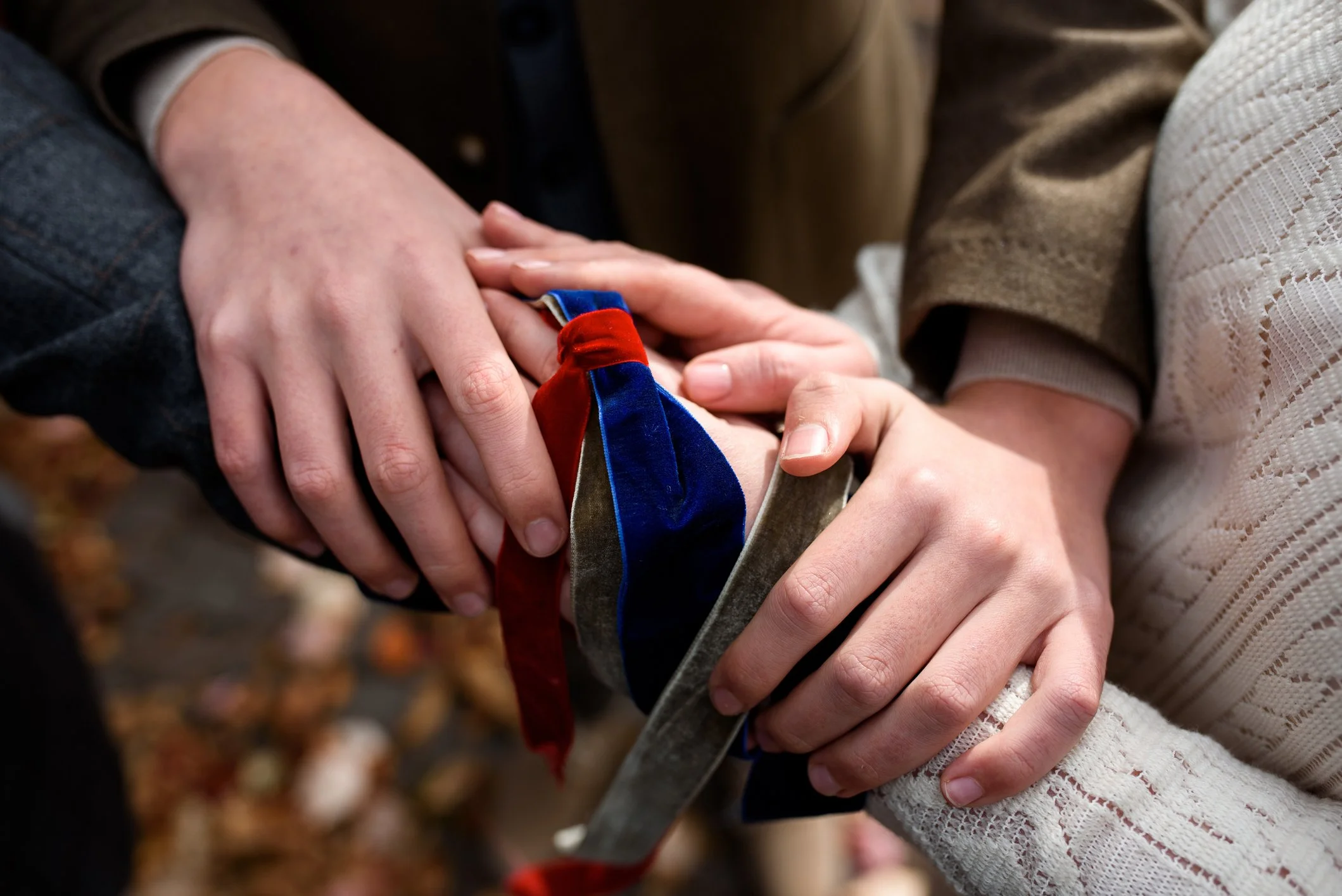
Handfasting is an ancient ceremonial practice that symbolises the binding of two lives together. Traditionally it involves the couple’s hands being tied together with cords or ribbons, representing their union and commitment. Often incorporated into modern wedding ceremonies, handfasting adds a meaningful and visually striking element, drawing on historical and cultural significance to celebrate love and partnership.
QUAICH
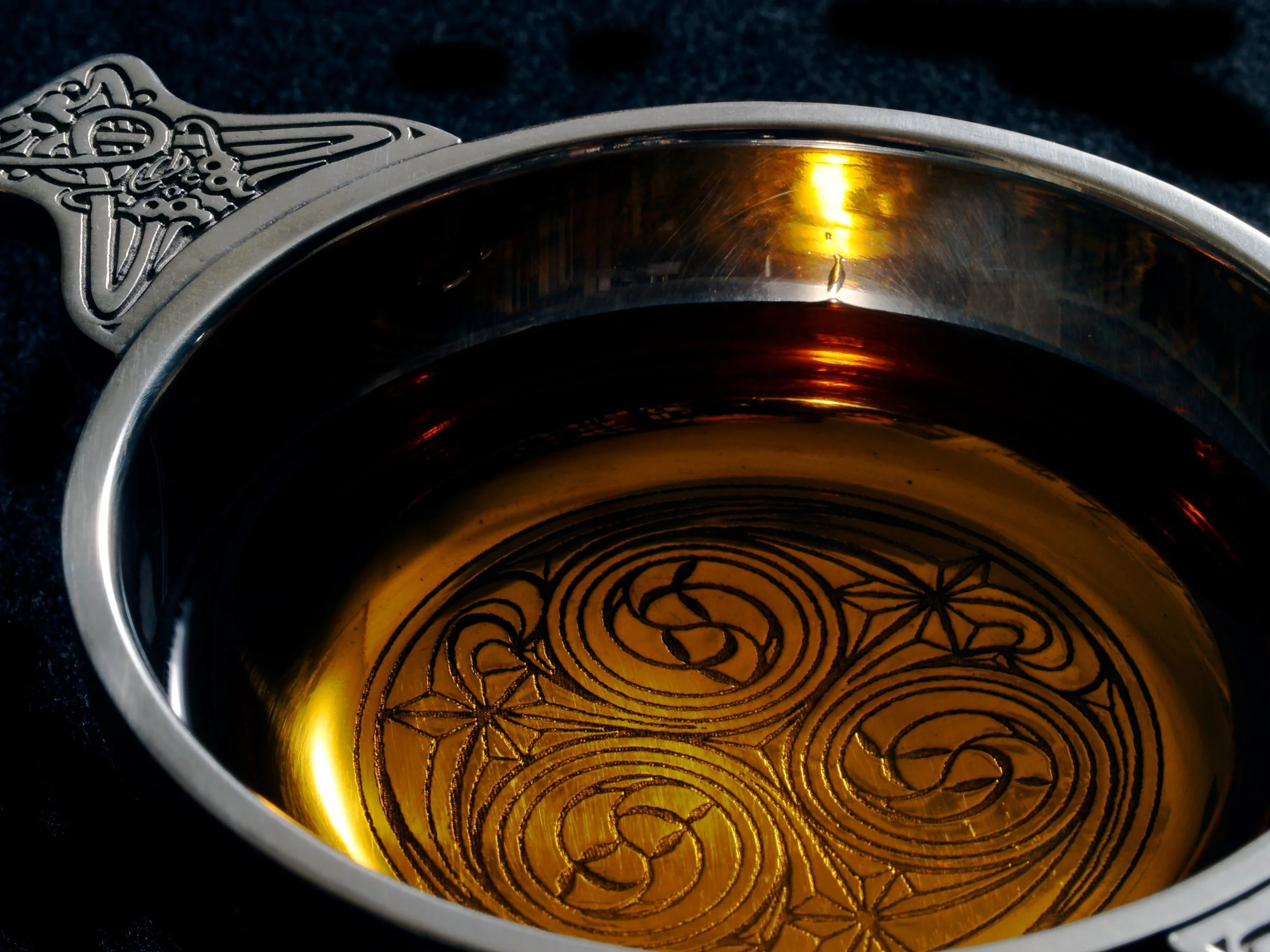
The use of a quaich in a wedding ceremony symbolises the sharing of life and unity between the couple. Traditionally a two-handled Scottish drinking cup, the quaich is passed between the bride and groom as they each take a sip from it to represent trust, love and the joining of their families. This ritual often follows the exchange of vows and serves as a meaningful moment of connection and heritage, whilst also honouring the communal support that surrounds the marriage. The quaich’s symbolism of friendship and hospitality adds cultural depth and heartfelt significance to the ceremony.
Sand Ceremony
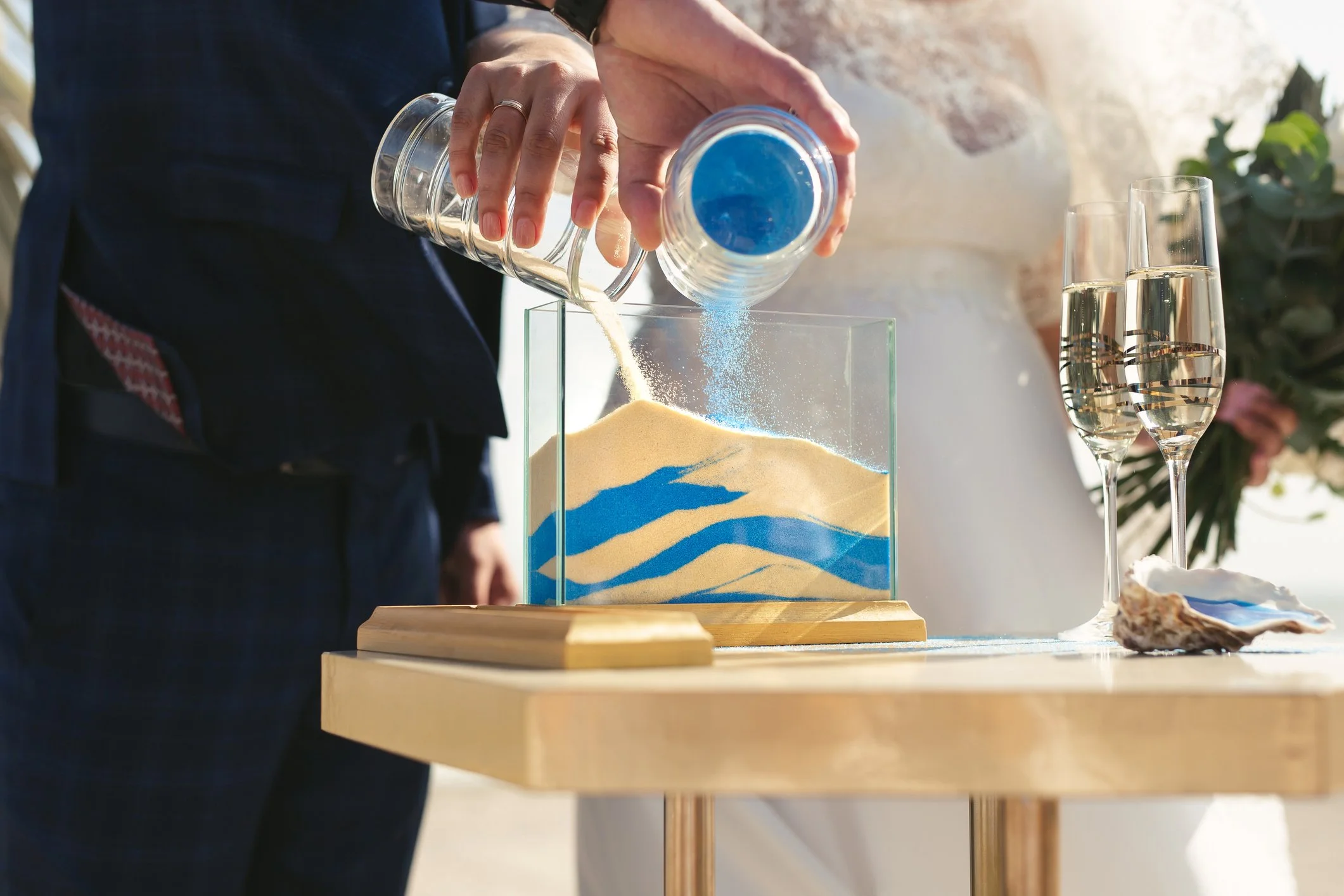
The sand ceremony is a beautiful and symbolic ritual that represents the joining of two lives. As the couple pour different coloured sand into a single vessel the grains blend together, illustrating your individual experiences and families uniting. The unique merging of sand serves as a visual reminder of the strength and harmony that comes from partnership, emphasising commitment through all of life’s moments.
Other Rituals
Couples often choose to include non-traditional rituals that add fun, meaning or audience participation to their wedding ceremony. Below are descriptions of several creative options-including the Mexican wave and ring warming-with how they work, what they symbolise, and practical tips for including them smoothly in your service.
Mexican wave (or “human wave”)
What it is: Guests create a travelling wave with their bodies or arms — similar to those seen at sporting events — moving around the ceremony space or reception.
Symbolism: Unity, collective joy and the contagious energy of loved ones supporting the couple.
How to include it: Best for casual, lively ceremonies or receptions. I can explain and cue the wave so it flows in one direction. Choose a natural break (after vows, before signing the register, or as part of a send-off) and ensure aisles and camera sightlines are clear.
Practical tips: Keep it brief; check with venue staff about spacing and accessibility; consider music to set the pace; be mindful of older or less mobile guests and invite anyone who prefers to sit out to join in spirit (applause, smiles).
Ring warming
What it is: Wedding rings are passed among guests for a short time so each person can offer a silent blessing, wish, prayer or good thought for the couple before the rings are exchanged.
Symbolism: Collective goodwill, community support and the transfer of love and intention into the rings.
How to include it: Rings are wrapped in a soft cloth or kept in a small box and passed around during the ceremony or at a pre-ceremony gathering. The celebrant briefly explains the ritual and invites guests to hold the rings for a moment and send a private blessing.
Practical tips: Decide whether rings will be passed during the ceremony (often during readings or a musical interlude) or at the reception before the ceremony begins. Assign a couple of ushers or attendants to help move the rings along if the seating is large. Ensure rings are secure and supervised to prevent loss. Offer an alternative-guests can simply hold them in their imagination-for those uncomfortable handling jewellery.
Other participatory rituals to consider
Wishing stones or notes: Guests place a stone in a bowl, or write a short wish on a card and drop it into a box or chest for the couple to read later.
Blessing or ring of hands: Guests form concentric circles around the couple and raise joined hands for a communal blessing led by the celebrant or an elder.
Flower petal shower with meaning: Give guests petals and a short line to recite (e.g. “May love grow”) as they shower the couple at the exit to add intentionality.
Musical wave or call-and-response: Guests learn a short chant, clap pattern or refrain to perform at a cue; this works well where music and participation are central.
Practical considerations for any group ritual
Inclusivity: Offer opt-outs and alternatives for guests who prefer not to participate (mobility, religious or personal reasons).
Timing: Place participatory rituals where they won’t interrupt key legal moments (vows, register signing) unless planned to complement them.
Explanation: A brief, clear explanation from the celebrant or MC helps guests understand meaning and feel comfortable taking part.
Accessibility and safety: Check venue layout, avoid overcrowding, and be mindful of children and older guests.
Rehearsal: Practise with attendants and key family members so movements are smooth and timings work with music and photography.
Choosing rituals that reflect your personalities and values makes your day both memorable and meaningful. I can help you select and script any participatory element so it feels natural, respectful and well-paced within your ceremony.